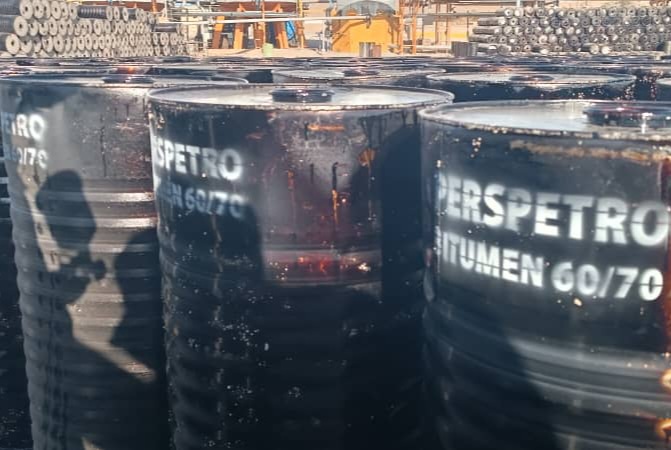
Bitumen is a black, sticky, and highly viscous material derived from crude oil during the refining process. It is widely used as a binding and waterproofing agent due to its excellent adhesive and impermeable properties. Bitumen plays a critical role in infrastructure, construction, and industrial applications around the world.
Bitumen is sometimes confused with asphalt; however, bitumen is the binding material, while asphalt is a mixture of bitumen and aggregates used mainly for road surfaces.
How Is Bitumen Produced?
Bitumen is sometimes confused with asphalt; however, bitumen is the binding material, while asphalt is a mixture of bitumen and aggregates used mainly for road surfaces.
How Is Bitumen Produced?
Bitumen is produced through the vacuum distillation of crude oil in refineries. During this process, lighter hydrocarbons are separated, leaving behind heavier residues that are further processed to obtain different grades of bitumen suitable for specific applications.
In some cases, bitumen may be further modified or oxidized to enhance its performance characteristics.
Types of Bitumen
1. Penetration Grade Bitumen
This is the most commonly used type of bitumen, especially in road construction. It is classified based on penetration values such as 60/70, 80/100, and 85/100.
Applications:
Applications:
Highway construction
Urban roads
Asphalt pavement
2. Oxidized (Blown) Bitumen
Oxidized bitumen is produced by blowing air through penetration-grade bitumen at high temperatures. This process increases its softening point and reduces penetration.
.
Applications:
Roofing systems
Waterproofing membranes
Industrial insulation
3. Cutback Bitumen
Cutback bitumen is made by dissolving bitumen in solvents to reduce its viscosity, making it workable at lower temperatures.
Applications:
Road maintenance
Cold weather paving
Prime and tack coats
4. Bitumen Emulsion
Bitumen emulsion consists of bitumen dispersed in water with emulsifying agents. It is environmentally friendly and easy to apply.
Applications:
Surface dressing
Road repairs
Dust control
Key Properties of Bitumen
Understanding bitumen properties is essential for selecting the correct grade for each project:
Penetration: Measures hardness or softness
Softening Point: Temperature at which bitumen softens
Viscosity: Resistance to flow
Ductility: Ability to stretch without breaking
Water Resistance: Excellent waterproofing capability
These properties determine how bitumen performs under different climate and traffic conditions.
Global Applications of Bitumen
Road Construction
More than 80% of global bitumen production is used in road construction due to its durability and flexibility.
Waterproofing and Roofing
Bitumen is widely used in roofing membranes, damp-proofing layers, and protective coatings.
Industrial Uses
Pipe coatings
Tank lining
Cable insulation
Why Bitumen Is Essential in Modern Infrastructure
Bitumen offers:
Long service life
Cost-effectiveness
High performance under extreme temperatures
Easy maintenance and recyclability
These advantages make bitumen a strategic material for infrastructure development worldwide.
Conclusion
Bitumen is a vital material in construction and industrial sectors, offering unmatched waterproofing, binding, and durability properties. Understanding its types, properties, and applications helps buyers and engineers choose the right bitumen grade for their projects..
Looking for Reliable BitumenSupply?
contact Perspetro today to recieve technical specificationand competitive export price.